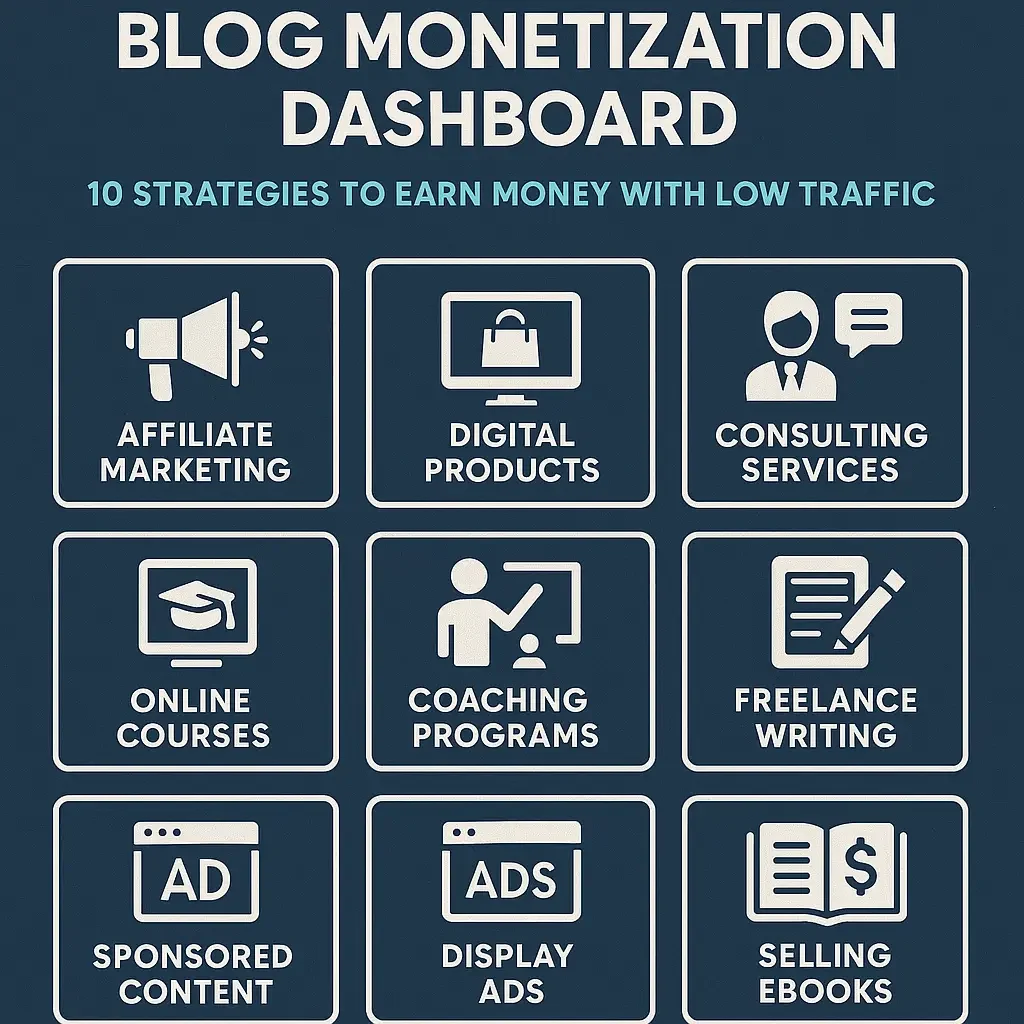

The Blogging Revenue Landscape
Blogging has evolved from a simple hobby into a legitimate career path that generates substantial income for thousands of content creators worldwide. The blogging industry has grown exponentially, with top bloggers earning six to seven figures annually. This financial success isn’t accidental but stems from strategic monetization approaches tailored to specific niches and audience needs.
Professional bloggers rarely rely on a single income stream. Instead, they develop diverse revenue channels that create stability and growth potential. According to recent industry surveys, successful bloggers typically implement between 3-7 different monetization methods simultaneously. This multi-faceted approach not only maximizes earning potential but also provides insulation against market fluctuations or algorithm changes. Discover how bloggers actually make money.
Display Advertising: The Foundation of Blog Monetization
Display advertising remains one of the most straightforward ways bloggers generate income. This method involves placing advertisements on a blog’s pages, sidebar, header, or within content. These ads typically operate on a pay-per-click (PPC) or pay-per-impression (PPM) model.
Google AdSense dominates the entry-level advertising space, offering an accessible program that matches ads to a blog’s content automatically. However, experienced bloggers with substantial traffic often transition to premium advertising networks like Mediavine, AdThrive, or Ezoic, which require minimum traffic thresholds (typically 50,000+ sessions monthly) but deliver significantly higher RPMs (revenue per thousand impressions).
The most successful bloggers in the display advertising space optimize their layouts for maximum ad visibility without compromising user experience. This delicate balance typically yields between $15-$40 RPM in profitable niches like finance, health, and home improvement, compared to $5-$15 RPM in more general categories.
Affiliate Marketing: Earning Through Recommendations
Affiliate marketing has become a cornerstone of blog monetization, with 80% of established bloggers incorporating it into their revenue strategy. This model allows bloggers to earn commissions by promoting products or services through unique tracking links.
Amazon Associates remains the most widely-used program due to its vast product selection, though its commission rates have decreased in recent years (typically 1-5%). Bloggers seeking higher returns often partner with specialty affiliate networks like ShareASale, CJ Affiliate, or direct brand programs, where commission rates can reach 20-50% for digital products and 5-20% for physical goods.
The most profitable affiliate marketers create detailed, solution-oriented content like product comparisons, in-depth reviews, and tutorials that naturally incorporate recommendations. This conversion-focused approach can generate $1,000-$10,000+ monthly for blogs with targeted traffic in purchasing-oriented niches like technology, personal finance, and home products. In this way bloggers actually make money.
Selling Digital Products: High-Margin Revenue Streams
Creating and selling digital products has emerged as one of the most profitable blog monetization strategies, offering profit margins that routinely exceed 90%. These products leverage a blogger’s expertise and require no inventory management or shipping logistics.
Popular digital offerings include:
- E-books and guides: Comprehensive resources that solve specific problems, typically priced between $7-$37
- Online courses: In-depth educational programs commanding premium prices from $97-$997+
- Templates and printables: Practical tools that save users time, ranging from $5-$29
- Membership subscriptions: Recurring revenue models providing exclusive content for $5-$50 monthly
Successful bloggers develop digital products that directly address their audience’s most pressing challenges. This relevance drives conversion rates far higher than third-party product promotions. Many established bloggers report that 30-50% of their total revenue comes from their proprietary digital products.
Sponsored Content Partnerships
As blogs grow their audience and authority, brand partnership opportunities become increasingly lucrative. Sponsored content involves creating articles, videos, or social media posts that feature a paying brand while maintaining editorial integrity and audience trust.
Sponsored post rates vary dramatically based on niche, audience demographics, and engagement metrics. General lifestyle bloggers might command $250-$1,500 per post, while specialized bloggers with highly engaged audiences in lucrative markets can charge $2,500-$20,000+ for comprehensive campaigns.
The most successful sponsored content creators maintain transparent relationships with their audiences about partnerships while delivering genuine value beyond mere product promotion. This authenticity preserves trust while satisfying brand requirements, creating sustainable partnership opportunities. In this way bloggers actually make money.
Offering Services: Monetizing Expertise Directly
Many bloggers leverage their demonstrated expertise to offer specialized services that complement their content focus. This approach works particularly well in professional niches like marketing, design, nutrition, and personal finance.
Common service offerings include:
- Coaching and consulting: One-on-one or group sessions at premium hourly rates
- Freelance services: Writing, design, or technical implementation for clients
- Speaking engagements: Paid presentations at conferences or corporate events
- Workshop facilitation: In-person or virtual training sessions
Service-based revenue often represents a significant income source during a blog’s growth phase, with many bloggers gradually transitioning from service provision to more scalable income streams as their audience expands. However, some bloggers maintain high-ticket consulting offerings indefinitely, charging $150-$500+ hourly for their specialized expertise.
Subscription Models and Premium Content
The subscription economy has created new monetization avenues for bloggers willing to develop premium content experiences. Platforms like Patreon, Substack, and membership plugins enable content creators to establish recurring revenue streams through subscriber-only offerings.
Successful subscription models typically provide:
- Early access: Releasing content to subscribers before public availability
- Enhanced content: More comprehensive versions of publicly available material
- Exclusive resources: Tools, templates, or content unavailable to non-subscribers
- Community access: Private forums, groups, or direct creator interaction
Monthly subscription rates typically range from $5-$25, with premium tiers reaching $50-$100+ for specialized professional content. The predictable income from subscriptions provides financial stability that one-time purchases cannot match, though maintaining subscriber retention requires consistent delivery of exceptional value.
Leveraging Email Marketing for Revenue Generation
Email marketing remains one of the most effective monetization channels for bloggers, with industry data showing that each subscriber represents $1-$5 in monthly revenue potential when properly engaged. Building and nurturing an email list creates a direct communication channel that isn’t subject to algorithm changes or platform policies.
Revenue-generating email strategies include:
- Product launch sequences: Coordinated campaigns introducing new offerings
- Affiliate promotions: Targeted recommendations based on subscriber interests
- Limited-time offers: Special discounts or bundles creating urgency
- Upsell sequences: Introducing premium options to existing customers
The most effective email marketers maintain a balance between value-driven content and promotional messages, typically adhering to an 80/20 ratio that prioritizes relationship building over direct selling. In this way bloggers actually make money.
Licensing and Content Syndication
Established bloggers with exceptional content can generate passive income through licensing and syndication arrangements. These agreements allow other publications to republish content for a fee, extending the blogger’s reach while creating additional revenue from existing material.
Media outlets, industry publications, and content aggregators may pay anywhere from $50-$500+ for one-time usage rights, while ongoing syndication partnerships can generate $1,000-$5,000+ monthly for bloggers with high-quality, specialized content. Additionally, photographers and visual content creators can license images through stock photography platforms or direct arrangements with brands.
The Multi-Channel Monetization Strategy
The most financially successful bloggers implement comprehensive monetization strategies that leverage multiple channels simultaneously. This integrated approach not only maximizes revenue but creates synergistic effects where each channel strengthens others.
A mature blog’s revenue distribution typically follows patterns like:
- 30-40% from digital products and courses
- 20-30% from affiliate marketing
- 15-25% from display advertising
- 10-20% from sponsored content
- 5-15% from services or other sources
This diversification provides stability while allowing bloggers to focus on highest-ROI activities as their businesses evolve. The path to significant blogging income rarely follows a linear trajectory, with most successful creators experiencing exponential growth after 2-3 years of consistent content development and audience building. In this way bloggers actually make money.